
Want a Less Stressful Move? 7 Tips to Reduce Relocation Anxiety
Anxiety tends to be an unwelcome accompaniment to most major life changes, from shifting careers to moving to a new residence. Moving in particularly very frequently ranks among the most demanding life events you can experience. It can be a long, complicated process involving changing your daily routines, managing ample physical labour, and coordinating logistics across long distances. It’s common, therefore, for many people faced with packing up an entire household to feel a little apprehension. Relocation anxiety is a highly common response to this sudden disruption and the sheer volume of tasks ahead of your relocation.
Like many other anxieties, finding ways to address the causes of your relocation anxiety is the ideal way of defusing it and regaining control of your life. One moving insight to make yourself aware of before you start is the importance of preparation. Proper planning is the most effective remedy for this stress; finding a structured, step-by-step approach to the move breaks up that massive undertaking into a series of manageable tasks.
Here are seven strategies you can employ yourself to minimize stress and maintain order while you move.
1. Make Yourself a Master Schedule
One trick to a smooth transition is starting the preparation phase in advance, at least six to eight weeks before the actual moving day. Relying on a vague mental list of chores too close to the date itself can contribute to stress as the final deadline approaches. More specifically, your responsibilities include:
Setting precise deadlines: Assign clear, non-negotiable completion dates for all your tasks, including sorting, packing, and deep cleaning specific areas of the house.
Breaking down the workload: Tackle one room at a time as you prep the house. Jumping randomly from the kitchen to the bedroom only leaves multiple rooms in a state of disarray.
Scheduling administrative tasks early: Book your rental truck or professional moving company weeks in advance to secure your preferred dates and avoid any last-minute scrambling.
2. Take the Chance to Declutter Your Things
Moves are a golden opportunity to declutter and reorganize your belongings; if you’ve ever thought about decluttering the house (and doing it ethically), now’s the perfect time to get it done. Packing items that you won’t be using in the new house is also a waste of time, energy, and packing materials. As you prepare for the move, take the time to assess your belongings and lighten the load.
Sort into strict categories: Create dedicated zones for items you wish to keep, sell, donate, or throw away. Be brutally honest when assessing your items to ensure you bring the essentials with you.
Assess furniture dimensions: Measure your new space beforehand. If a large sofa will not fit the floor plan, then you’ll know to sell it before the move.
Dispose of hazards: Safely discard any hazardous materials (such as old paint, harsh cleaning chemicals, and batteries) according to your local municipal guidelines.

3. Colour-code Your Box Labels
Unpacking is just as important as packing; arranging your items (and taking particular care with fragile items) beforehand lets you avoid any anxiety from scrounging around your boxes until you find what you’re looking for. Establishing a visible labelling system goes a long way to helping you know which box contains what when you need it.
Assign specific colours to rooms: Use colours to denote specific rooms for ease of organization. For instance, use a green marker or green tape for the kitchen, blue for the primary bedroom, and yellow for the main bathroom.
Detail the contents: Write a brief, bulleted inventory on the side of the box, where the text can be seen even if you’ve stacked boxes on top of one another.
Mark fragile items: Clearly label delicate belongings on all sides to ensure anyone handling the boxes knows to proceed with the utmost caution.
4. Make an Essentials Kit for Your First Day
The first night in a new property is rarely a perfect process. After all the time spent preparing and travelling to your new home, searching through taped boxes for a toothbrush or a clean shirt is the last thing you want.
Pack basic toiletries: Include toothbrushes, toothpaste, hand soap, toilet paper, and fresh towels in your kit to ensure you can stay on top of hygiene in those early days.
Include a change of clothes: Have comfortable sleepwear and fresh, practical clothing ready for the following morning so you can continue settling in.
Gather basic tools: Keep a utility knife, a multi-bit screwdriver, and a flashlight easily accessible for immediate tasks.
Prepare food and hydration: Pack a few non-perishable snacks, a kettle, coffee or tea supplies, and basic eating utensils.
5. Take Care with Your Heavy Lifting
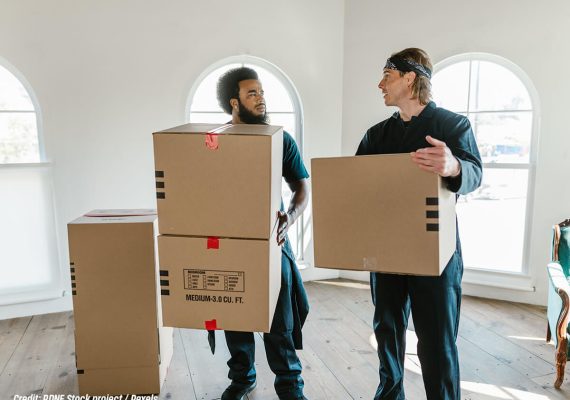
Knowing how to carry heavy loads goes a long way toward protecting your back and minimizing anxiety about that possibility. Protecting your back and joints from injury should always be a priority when doing any heavy lifting.
Limit box weight rigorously: Take care that no single box exceeds 15 to 20 kilograms in weight. Overpacking large boxes with dense, heavy items like books is a frequent mistake that can lead to back strain.
Use proper moving equipment: Always rent or purchase a sturdy dolly or hand truck for moving heavy appliances and stacked boxes.
Distribute weight evenly: Place heavier items at the bottom of the box and fill the remaining empty space with lighter goods like pillows or winter clothing.
6. Coordinate Address Changes and Utility Transfers Carefully
Arriving at a new home only to discover that the electricity, internet, or water has not been activated is an additional stressor you don’t need. Make sure you’ve gotten those administrative tasks done before the moving truck arrives.
Schedule disconnections and connections: Arrange for utilities at your current home to be shut off the day after you leave, and ensure services at the new property are active the day prior to arrival.
Update important documentation: Promptly change your address on driver’s licences, bank accounts, and insurance policies as soon as the move’s done.
Set up mail forwarding: Register with the postal service to forward mail to the new address for several months to catch any overlooked bills.
7. Accept Imperfection and Stay Flexible
Even with the most rigorous planning and scheduling, unexpected issues will inevitably arise. A truck might arrive late, or a piece of furniture might lightly scratch a doorframe during the transfer.
Build in vital buffer time: Allow extra hours in your schedule for final cleaning and final property walkthroughs.
Focus on the end goal: Keep the long-term benefits of your new environment in mind when minor, temporary setbacks occur.
Take necessary breaks: Stop for meals and stay hydrated. Continuous physical exertion without proper rest rapidly increases irritability and fatigue.
There’s more to getting a move done than loading your boxes and getting to your destination. It takes patience, stamina, and a highly systematic approach to settle into a new environment and do so with a minimum of stress. There’s no reason a relocation has to be difficult and stress-inducing; with these practical steps and a clear plan of action, moving into your new home can be a much easier prospect. And the fruit of all this preparation is a calmer, organized transition that lets you properly enjoy the fresh start in your new home.
Ready for a seamless move? Let E&V Moving Solutions handle the heavy lifting. From careful packing to secure transport, our team guarantees your belongings arrive safely. You don’t have to let relocation anxiety overwhelm you; we’re here to make your move simple and stress-free. Call us at 587-470-230 and get the help you need for a seamless move.