Want to Protect Your Stuff? 10 Essential Tips for Packing Fragile Objects
It’s not out-of-the-ordinary to be a little on-edge during a move, perhaps more so when you’re going on a long-distance move and certainly where it concerns your things. Making sure your glass and ceramic items stay safe during the move can feel like a full-time job; the fragility of these objects (and the possibility they might get jostled around if the trip is less than smooth sailing) is a hard thought to dislodge. From the moment a box gets onto the moving truck, these fragile objects face a gauntlet of potential hazards. Ensuring their safety, therefore, isn’t something you leave up to luck; that job demands careful packing, prioritizing cushioning, structural integrity, and careful handling.
The job of protecting those fragile items comes down to creating a protective cocoon for them inside their boxes. Your aim here is eliminating movement within the box while providing also enough shock absorption to neutralize external impacts. By implementing an effective packing plan, you can go a long way to preventing finding a jigsaw puzzle of shards in place of your items once you unpack. Here are ten essential tips to help you pack your fragile objects and keep them snug in their packaging.
1. Invest in High-Quality Packing Materials
Any successful packing endeavour starts with your materials, and for that you need quality. While it might be tempting to repurpose old grocery store boxes, these often lack the structural integrity required for heavy or delicate items. Instead, opt for brand-new, corrugated cardboard boxes that haven’t undergone any wear and tear yet. For particularly heavy or valuable items, double-walled boxes are ideal for providing an extra layer of protection against impacts.
Beyond the box itself, you’ll also need cushioning agents as well. Heavy-duty packing tape is a must, as is a generous supply of acid-free packing paper and bubble wrap. For highly sensitive items, consider specialized materials like foam peanuts or corrugated wrap to provide additional protection. Always remember above all that the cost of high-quality supplies is an investment in security; it’s a small price to pay compared to the value of the items you’re protecting.
2. Reinforce the Base of Your Boxes
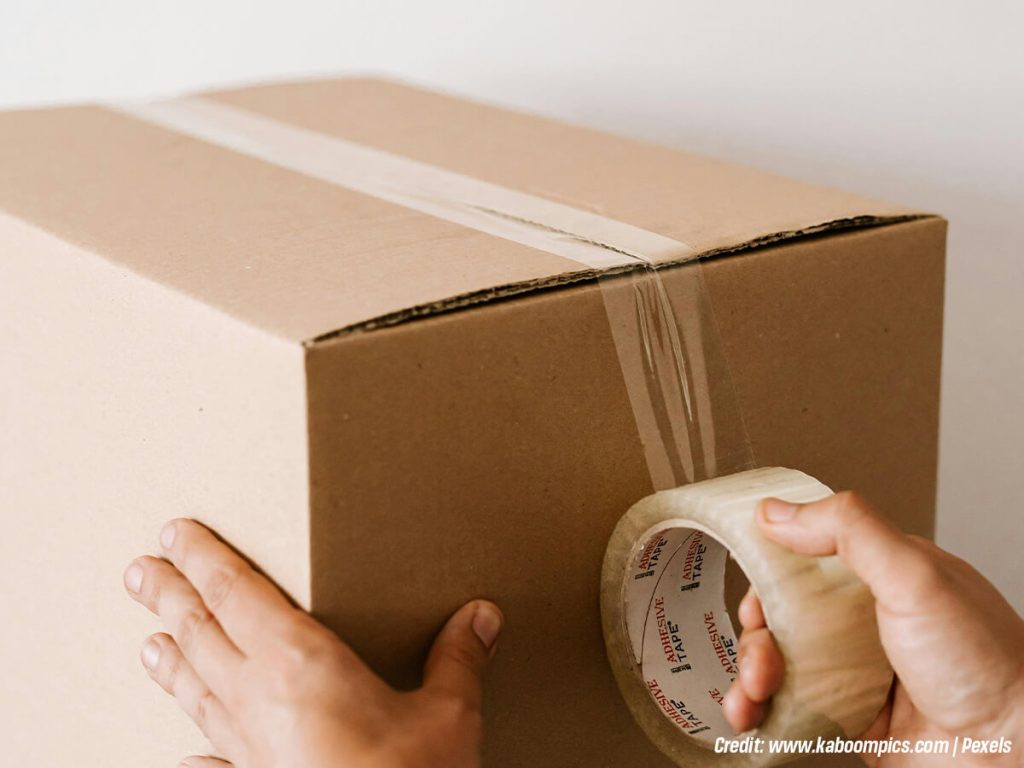
Before a single item goes into a box, you also need to ensure that the container can hold the weight. The bottom of a cardboard box is its weakest point, and factory glue or single strip of tape is rarely sufficient for fragile loads. Taping your box properly takes a little more effort to secure the bottom than those simple measures. When securing the bottom, use the “H-taping” method: apply a long strip of tape across the centre seam and then two additional strips across the side seams to create the shape of a capital letter “H.”
Once the exterior is reinforced, create a crumple zone at the bottom of the interior to protect the contents. Wad up several sheets of packing paper and layer them at the base to a thickness of at least 5 centimetres. This layer acts as a shock absorber, preventing the contents from making direct contact with the floor of the box when it is set down.
3. Wrap Each Item Individually
A common mistake is allowing fragile items to touch one another inside a box. If two glass vases are placed side-by-side without a barrier, for example, the vibrations during transport will cause them to clatter against each other, which can lead to chips or cracks. Part of knowing how to package and wrap your items properly is understanding that every single object must be wrapped independently.
Start with a layer of soft packing paper to protect the surface from scratches. For items with intricate details or handles, use bubble wrap as a second layer, ensuring the bubbles face inward for maximum grip and cushioning. Secure the wrapping with a small piece of tape so it doesn’t unravel as you arrange the items in the crate.
4. Use the “Box-in-a-Box” Method for High-Value Items
For extremely delicate objects, such as antique porcelain or fine electronics, the most effective technique is the double-box method. This involves packing the item securely in a small box, then placing that smaller box inside a larger one.
The gap between the inner and outer box should be roughly 5 to 8 centimetres on all sides. Fill this void with packing peanuts or tightly crumpled paper. This setup creates a suspension system; even if the outer box is punctured or dented, the inner box remains isolated from the impact, keeping the contents safe.
5. Prioritize Weight Distribution and Placement
How you arrange items inside a box is just as important as the wrapping. As anyone with experience in packing and crating items strategically might tell you, you’re meant to place the heaviest and sturdiest items at the bottom and the lightest, most delicate items at the top. For example, if you are packing kitchenware, heavy ceramic plates should be at the base, while wine glasses should sit closer to the lid.
Another rule of thumb is to avoid overstuffing a box. While it is efficient to use all available space, a too-heavy box becomes difficult to carry safely, which increases the likelihood of it being dropped. Aim for a maximum weight of about 15 kilograms per box to ensure it remains a manageable load for a single person.
6. Fill All Internal Voids
Movement is the primary enemy of fragile goods. If you can hear the contents of a box shifting when you gently shake it, it’s not packed correctly. Once your wrapped items are inside, there will, however, be small gaps and corners that remain empty.
There is something you can do about these voids; fill them with filler. Crumpled newsprint (provided the ink won’t stain), air pillows, or even soft linens like towels and socks can work wonders. The goal is to create a solid, yet cushioned, mass within the box. When you close the flaps, there should be a slight resistance from the packing material, indicating that everything is held firmly in place.
7. Pack Plates and Glassware Strategically
Different shapes require different orientations. Many people instinctively pack plates flat, stacking them like a tower. However, plates are much stronger when stored on their edges. Wrap each plate in bubble wrap and stand them up side-by-side. If the box is dropped, the vertical orientation allows the plate to better withstand the force.
For glassware, always fill any hollow interiors with crumpled paper. This reinforces the structure from the inside, making the glass less likely to collapse under pressure. When placing glasses in a box, it also helps to stand them upright on their bases rather than laying them on their sides, as the rims and stems are often the most fragile parts.
8. Take Special Care with Sharp or Protruding Parts
Items with handles, spouts, or long necks (e.g. teapots or figurines) require extra attention. These protrusions are high-stress points that can easily snap off on impact. Wrap these specific areas with extra layers of bubble wrap until the protrusion is no longer the most prominent part of the object.
For example, when packing a teapot, wrap the handle and the spout separately before wrapping the entire body. You also want to level out the shape of the object so that it resembles a uniform bundle. This ensures that any pressure applied to the box is distributed across the entire surface of the item rather than being concentrated on a delicate handle.
9. Seal and Label with Precision
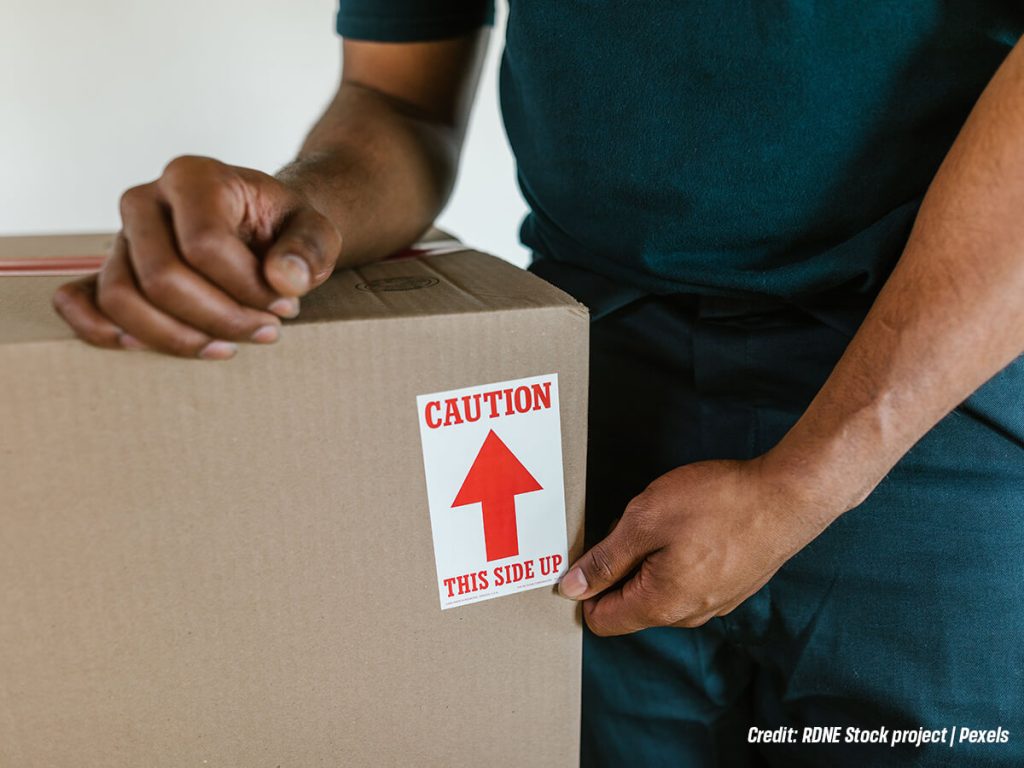
Once the box is filled and the top layer of cushioning is added, seal the lid using the same H-taping method used for the bottom. However, the job is not done until the box is clearly labeled. Use a bold, permanent marker to write “FRAGILE” on at least three sides of the box, as well as on the top.
Additionally, mark “THIS SIDE UP” with arrows to ensure the box is never stored upside down or on its side. If the box contains specific items like “Stemware” or “Crystal Lamp,” note that as well. Clear labeling alerts anyone handling the box that they need to move with caution and prevents them from stacking heavy, non-fragile crates on top of your delicate items.
10. Prepare the Transport Area
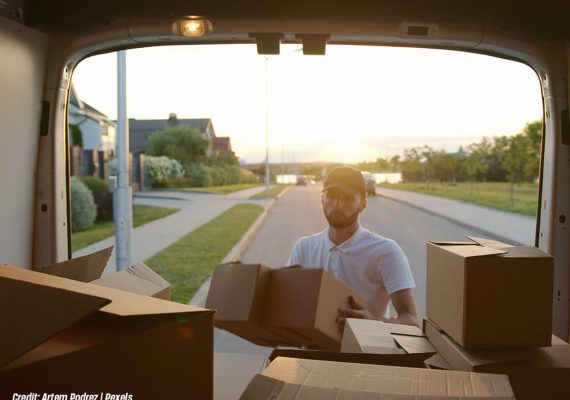
The final tip involves the environment where the boxes will be moved. Ensure that the path from your packing station to the vehicle is clear of debris or tripping hazards. If you are loading a truck, place your fragile boxes in a dedicated high-safe area (this is usually on top of heavier, stable furniture like sofas or dressers) or secured in a way that they cannot slide.
Avoid placing fragile boxes near the very back of a truck where they are most susceptible to the bouncing motion of the rear wheels. By controlling the environment and the placement within the vehicle, you provide the final layer of security for your belongings, ensuring they arrive at their destination in the same condition they left.
There’s no reason you have to endure spending most of an already-taxing move worrying about your most fragile valuables, not when there are ways to look after them. Safeguarding those delicate possessions doesn’t take too much either, just a little patience and some premium materials to work with. With a little help from these packing techniques, you can greatly minimize the risk of damage during transit. Just keep these tips in mind, and you can ensure your valued items arrive at their new destination in pristine, unbroken condition.
When it comes to fragile items, you don’t have to leave anything to change. At E&V Moving Solutions, we hold ourselves to the highest standards when handling your goods. As such, we treat every box with the care it deserves and help you with the handling from the very moment we arrive at your door. Contact us today at 1-888-380-8025 (for Toronto), 905-404-0736 (for Oshawa), or 587-470-2308 (for Calgary), and let us help put your items away. We offer full packing services on top of moving to ensure your items are safely prepared for the trip.